Our Blog

What role do elastics (rubber bands) play in orthodontics?

November 8th, 2023

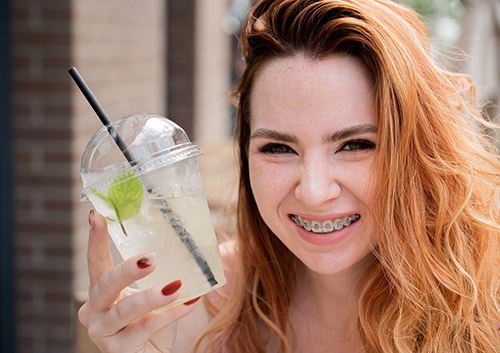
Wearing orthodontic braces may be the best choice for correcting your teeth and improving your smile, and that's why you've come to see Dr. Kathleen Tavarez at Tavarez Orthodontics. Braces, which consist of brackets and wires, work by gently applying pressure to the teeth, and that pressure causes them to move into the correct position. In some cases elastics, or rubber bands, are used to apply additional pressure needed to move your teeth.

The Purpose of Elastics

Customized for each patient, the rubber bands typically stretch over tiny loops on the top and bottom brackets. If worn consistently, and every day, these tiny elastics will apply the steady pressure needed to guide your teeth into the correct position.

These elastics are crafted from medical-grade latex, which is safe to be in contact with your mouth. It's common to remove the elastics during meals if opening your mouth wide enough to eat is difficult. Our staff will demonstrate how to affix the elastics so it will soon become second nature to replace them.

The Do’s and the Don'ts

DO - Get in the habit of carrying around extra rubber bands and replace them as soon as one breaks. By consistently wearing the elastics, you may shorten the overall time needed to wear braces.

DON'T - Double up on elastics as this will cause too much pressure on the tooth or teeth and can actually harm the root of the tooth.

DO - Always wash your hands before removing or replacing the rubber bands.

DON'T - Overstretch the rubber band or it will lose its strength and it will be ineffective.

DO - Call us if you run out of rubber bands.

DO - Have fun with your braces and elastics. There are many different colors available that can let you show off your soon-to-be perfect smile.

Rubber bands are a key part of your orthodontic treatment, and learning how to remove and replace them is an important part to maintaining your braces. Before we set you on your journey to a perfect smile, we'll make sure you understand all there is to know about how to take care of your braces. Of course, if you have any questions about your orthodontic treatment, or orthodontics in general, be sure to contact our Menlo Park or San Carlos, CA office, and our staff will be happy to assist you!

National Brush Day

November 2nd, 2023

October 31—Halloween. Fourth Thursday in November—Thanksgiving. And, in between these two favorite autumn holidays, we have November 1—National Brush Day!

Okay, okay. Maybe National Brush Day isn’t quite as well-known as Halloween or Thanksgiving, but we take any opportunity to celebrate your dental health. So, let’s celebrate brushing!

After all, brushing is vital for healthy teeth and gums.

  • Brushing is your first line of defense against plaque. Plaque forms all day long. Plaque sticks to your teeth. Plaque is filled with bacteria which produce cavity-causing acids. Brushing regularly means plaque won’t stay on your teeth long enough to cause serious tooth decay.
  • Brushing effectively is especially important while you wear braces. Plaque collects around brackets and can cause enamel discoloration if it’s allowed to build up.
  • Brushing is also important for your gum health. Angling your brush to carefully clean plaque and bacteria away from your gum line helps prevent gum disease.

To make the most of the time you spend brushing, let’s take a moment to review some basics on National Brush Day.

Are You Brushing Correctly?

  • Big, broad brushstrokes aren’t the answer. Instead, use short up-and-down or circular strokes over each tooth—outside, inside, and on the flat surfaces of your molars.
  • Because plaque forms all day, you need to keep on top of it. Brushing at least twice a day for two minutes each time is a good general rule, but doesn’t always hold true during orthodontic treatment.
    • If you wear braces, Dr. Kathleen Tavarez will probably recommend brushing after each meal or snack to make sure plaque and food particles don’t stick to your teeth and your braces.
    • Take advantage of the special orthodontic brushes that are available if your old brush isn’t cleaning your braces (and your teeth!) as well as you’d like. A brush with a smaller head or different shaped bristles might make all the difference.
    • If you have aligners, you take them out to eat. It’s always a good idea to brush before you replace them. Otherwise, food particles which would normally be brushed away or washed away by saliva are trapped next to your teeth.
  • Brushes are meant to clean, not to scrub. You don’t need a heavy hand for cleaner teeth.
  • Which also means, there’s almost never a good time to brush with a hard-bristled brush. Hard bristles, along with hard brushing, can actually damage your enamel. Stick to a soft-bristled brush for dental TLC.

Are You Taking Care of Your Brush?

  • To clean away bacteria and viruses you might have picked up during the day, wash your hands before brushing and flossing.
  • Shake your brush dry when you’re finished and then let it air-dry upright with the handle pointing down. Only use a case for travel, and make sure it has air holes for ventilation. (Bacteria thrive in a wet environment.)
  • If your toothbrush lives in the bathroom, close the toilet seat before flushing to avoid airborne particles.
  • No matter how close you are to your family members or roommates, don’t share your toothbrush. Sharing doesn’t mean caring in this case—it means sharing germs. Your brush should keep a healthy distance from other brushes as well.
  • And no matter how fond you are of your brush, be prepared to replace it often! Most brushes last three to four months at best, because bristles start to fray and can’t clean effectively after several months of use.

It’s no coincidence that National Brush Day comes right after Halloween, the most sugar-filled holiday of them all. So, how can we mark the occasion?

Take a moment to review your brushing habits. Check out the brushes designed for orthodontic treatment. Treat yourself to a new toothbrush. Brushing your teeth properly is one of the easiest things you can do to protect your oral health. That’s something to celebrate!

A Helpful Site on Orthodontics

November 1st, 2023

As you are undergoing orthodontic treatment, our team at Tavarez Orthodontics would like to point you to a helpful website. Our friends at the American Association of Orthodontists (AAO) have lots of important information about everything relating to braces, including myths and facts of orthodontics, tips for a better orthodontic experience, and cool webisodes about orthodontics.

Check out AAO today and feel free to contact us at our Menlo Park or San Carlos, CA office if you have any questions.

Dr. Kathleen Tavarez and our team at Tavarez Orthodontics hope this information helps you!

Witch Halloween Treats Are Trickiest for Your Teeth and Braces?

October 26th, 2023

It’s that time of year again—Halloween! Carving pumpkins. Creating costumes. And, of course, collecting candy.

But some of the candies in that collection aren’t much of a treat for your teeth. When you’re deciding on the perfect pieces to choose from the candy cauldron, here are some tricks to identify the ones that can be more frightful than delightful for your tooth enamel and braces:   

  • Is It Chewy or Sticky?

Any sticky or chewy candy—caramels, taffy, licorice, gummy anythings—is candy that also sticks to your teeth. And it really sticks in between your teeth, where it’s harder to brush away.

The problem? Bacteria in plaque love sugar, and sticky candies provide them with hours of sugary feasting. Bacteria use this sugar to make acids, and acids cause weak spots in tooth enamel. These weak spots will get bigger over time as the bacteria keep on attacking your enamel, and that’s how you can end up with a cavity. Less sugar which spends less time on your teeth = fewer cavities!

And there’s another good reason to pass up chewy treats if you wear braces. Candy can get stuck under your brackets and wires, or be sticky enough to pull a bracket right off a tooth.

  • Is It Sour?

Sour candies get that intense, lip-puckering taste because they’re so acidic. What’s wrong with acids? Just like the acids made by bacteria, acids in food attack our tooth enamel, too.

Sour candies are hard on your teeth all by themselves. When you eat a candy that’s both sour (acidic) and gummy (sticky), all coated in sugar, that’s triple trouble!

  • Is It Hard or Crunchy?

Some kids like hard candies like lollipops and fruity drops because they last a long time. But that’s the problem. All that time a hard candy rolls around in your mouth is time spent bathing your teeth with sugar.

Thinking of shortening your sugar exposure by chewing hard candies? Also a bad idea! Crunching into a piece of hard candy can chip or crack a tooth and even damage fillings.

Crunchy treats can be hard on braces, too. Peanut brittle, nutty candy bars, candy apples, popcorn balls, or any hard or crunchy candy can damage your brackets and wires when you bite down.

Luckily, there are healthier trick-or-treating choices if you know what to look for. 

  • Soft Candies and Chocolates

A chocolate bar, a peanut butter cup, mint patties, and other soft candies won’t stick around on your teeth the same way chewy or hard candies do. No sour acids, either. And because dark chocolate has less sugar than lighter chocolates, it’s an even healthier choice.

Bonus: They’re easy to bite and chew when you wear braces!

  • Sugar-Free Gum

This treat is not only sugarless, but chewing it helps us make more saliva. Saliva washes away sugary food particles and helps neutralize the acids in the mouth. If you wear braces, check with Dr. Kathleen Tavarez to see if sugar-free gum is safe for your brackets and wires.

No need to skip the trick-or-treating this year. Occasional sugary or acidic treats can be balanced out with daily brushing and flossing, a healthy diet, and regular visits to your dentist for exams and cleanings. When you do enjoy a treat that’s sugary or acidic, there are tricks to help you keep your smile healthy and cavity-free.

  • Eat a treat or two with your meals instead of snacking through the day. You won’t be exposing your teeth to sugar for hours at a time, which means bacteria and acids won’t be haunting your enamel all day long.
  • Drink water. If you eat your candy with an acidic soda, you’re getting sugar + sugar + acids. That’s a scary recipe when it comes to healthy teeth! Water helps wash away sugar and acids—and, if you have fluoridated water in your community, you’ll be getting a bit of fluoride to strengthen your enamel, too.
  • Halloween is no time to ghost your toothbrush and floss. Be extra careful to brush and clean between your teeth after eating sweets. Wearing braces? Don’t forget to clean around your brackets and wires. Using aligners? Be sure to brush well after you eat something sugary before you replace them.

If you’re wearing braces this Halloween season, it’s important to avoid all the sticky, hard, and crunchy treats to keep your braces and your treatment schedule intact.

Any questions? Talk to Dr. Kathleen Tavarez at our Menlo Park or San Carlos, CA office to learn the best ways to keep your smile looking boo-tiful all year long!