April 24th, 2024

Clear aligners like Invisalign® have become increasingly popular over the past several years and rightly so. They’re removable, easier to clean than braces, and hardly anyone knows you're wearing them. They are great in treating many cases, but they aren't for everyone.
Below, Dr. Kathleen Tavarez and our team cover some of the instances where clear aligners just aren't the answer:
- If drastic tooth movement is required – Fixed appliances deliver much more significant tooth movement. So if your case is a drastic one, clear aligners may not be the best choice.
- If you need to move molars – Molars have much stronger roots than your other teeth and would require significantly longer to move with clear aligners. A fixed appliance is the best choice in this instance, especially if you have a substantial overbite or underbite that needs to be dealt with.
- If you're the type who often forgets or loses things –If you would forget to wear your aligners for the prescribed amount of time (usually at least 22 hours per day), clear aligners are probably not the best choice for you. Forgetting to wear them can delay treatment and even make it so you need to regress to the previous set of aligners to be able to move forward with treatment. And let's face it, if you're not careful, removable aligners are easy to lose. Losing aligners delays treatment and is expensive since you need to buy replacements to stay on course. Replacing a lost set of aligners usually takes between seven and ten days—a definite setback in treatment.
- If you're looking for the fastest treatment possible – Clear aligners usually can't move teeth as quickly as fixed appliances. So if you're looking for the fastest way to achieve your desired result, clear aligners may not be the best bet.
Feel free to talk with Dr. Kathleen Tavarez about your options regarding braces and clear aligners. We know there are pros and cons to both, so let’s find the option that works best in your life and for your specific needs in terms of treatment. Schedule an appointment at our Menlo Park or San Carlos, CA office today!
April 17th, 2024
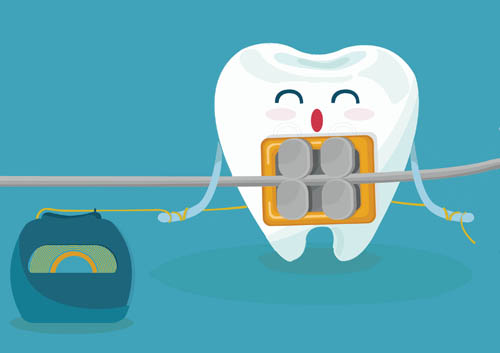
The Tavarez Orthodontics team knows that oral hygiene is important, whether you have braces on your teeth or not. But if you are a person who wears braces, caring for your teeth and gums can become somewhat challenging. Without daily oral hygiene practices, you may become prone to cavities and tooth decay during your time in braces.
Naturally, you know that brushing your teeth each morning and night, as well as after you eat, will help keep your mouth healthy and clean during the months you wear braces. But flossing is also an important part of your hygiene routine. Flossing with braces can be tricky, but it’s not impossible. Dr. Kathleen Tavarez, your general dentist, or your dental hygienist can help you become more comfortable and adept at flossing your teeth during the months you wear braces.
Flossing Tips for Those with Braces
- Use Tools Provided by Our Office. A floss threader is a small, plastic needle that will help you floss between the wires and your teeth. Thread a 12-to-18-inch piece of floss onto the needle, and use the needle to get the floss easily behind the wires.
- Flossing Under the Wires. Once the floss is behind the wires, use your hands to manipulate the floss. Move it up and down along the wires to remove food particles.
- Flossing Between Your Teeth. Floss between your teeth as you normally would without braces. Move the floss up and down between your teeth, using a clean section of floss for each tooth.
- After You Finish Flossing. Your orthodontist may have suggested that you use a water pik or proxy brush after you finish brushing. Either of these tools will help remove any loosened food particles to ensure that your teeth and braces are clean.
Continue Good Oral Hygiene Habits
Good oral hygiene habits you use while wearing braces will help you achieve the beautiful smile you and the Tavarez Orthodontics team have been working toward. Once your braces are off, it may be tempting to slack off on the brushing and flossing. Don’t let yourself fall into any habits that will have a negative impact on your oral health or the attractive smile you waited for throughout the months you wore braces. See your general dentist for regular cleanings, and continue to brush and floss your teeth each day.
April 17th, 2024
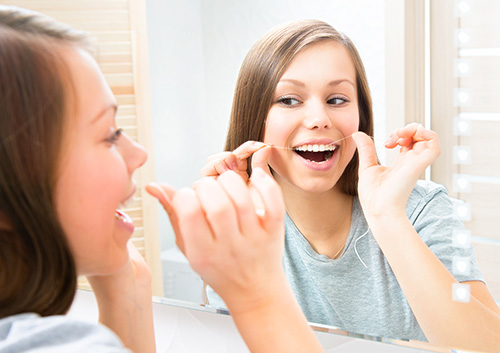
Dental floss is similar to a lot of products that depend mainly on the consumer’s preference. Fact is, floss comes in a wide variety of flavors, coatings, and other variations, but all types of floss essentially do the same thing. After all, that is what is most important: that the dental floss you buy is functional—cleaning the areas in between your teeth. If you want to know what the best dental floss is, the answer is the kind that enables you to successfully and regularly clean those areas. So to help you find the right type of floss for you, here are some options.
Flavored Dental Floss
Many people that floss prefer a flavored dental floss because it freshens their breath even more than unscented floss. The latter can also take on the smells associated with bacteria in your mouth. And we all know how bad that can be. So, if flavored dental floss is what you prefer, and it allows you to floss your teeth regularly, then it is automatically best for your mouth.
Flossers
There are also products on the market called flossers, which usually consist of a plastic instrument with strung floss and a pick on the opposite end. This option can be both effective at cleaning the areas in between your teeth and scraping off plaque. These flossers also come flavored in mint and various other varieties.
Gentle Dental Floss
Some people find that typical dental floss is too harsh on their gums. For that reason some companies make floss with soft coatings that are less abrasive on the gums. For the most part these types of floss are just as effective as regular floss, and for those people that require a more sensitive approach to flossing, especially when just starting out, this is the best option.
Of the aforementioned options, it is difficult to name an absolute best type of floss. However, Dr. Kathleen Tavarez and our team say that the type of floss that works best for you, giving you the greatest chance of succeeding at regular flossing, is the best. For more information on floss, contact our Menlo Park or San Carlos, CA office.
April 10th, 2024

It's almost game day and you're wondering what to put on the menu for your guests. Most snacks are typically highly processed and unhealthy. Why not mix it up this year and opt for some snacks that promote good oral health? Here are some of Dr. Kathleen Tavarez favorites!
- Apples, carrots, celery, and cucumbers: These foods and other crispy, fibrous, fruits and vegetables are an excellent choice for the big game. Not only are they rich in vitamins and minerals which your body and mouth need, they are also known as detergent foods because of the cleaning effect they have on the teeth and gums. Try apples wedges spread with peanut butter and sprinkled with cinnamon.
- Beans: Beans are filling because they are packed with fiber and that keeps you from opting for sugary or fatty snacks. Along with fruits and vegetables, beans should be one of the stars of your game-day snack lineup. How about some hearty chickpea hummus with cucumber chips?
- Nuts like almonds, walnuts, pistachios, and cashews: Nuts abound in the minerals that help keep your teeth and gums strong like calcium, magnesium, and potassium. Put out a bowl of raw or roasted nuts for your guests as a crunchy, satisfying alternative to chips or crackers. Recent research even shows that the polyunsaturated fatty acids in nuts may help prevent gum disease. But remember not to eat the whole bowl! Nuts are very high in calories and a little goes a long way. Enjoy and handful or two along with your other healthy snacks.
- Dark chocolate: This one may be hard to believe at first, but research shows chocolate can be great for your teeth and help prevent decay! Now don't run off and start stocking your pantry with a bunch of that super sweet stuff, because these benefits come mainly from the tannins, polyphenols, and flavonoids present in the cacao bean. Dark chocolate is the least processed variety of chocolate and the closest to the cacao bean, so make sure you purchase a variety that is listed as 70% cocoa or more for these benefits. Like with nuts, chocolate is easy to overdo — aim to eat two or three squares.


 Website Powered by Sesame 24-7™