April 16th, 2025

You’ve selected the Invisalign system because of the many benefits Invisalign offers: comfort, convenience, appearance, and even potentially shorter treatment time! And to add to the good news, caring for your Invisalign aligners is easy and uncomplicated. Follow these simple tips to keep your aligners in the best possible shape as you move through the stages of your treatment.
Stay Clean
- Always brush and floss your teeth before using your aligners so that bacteria and food particles will not have a chance to collect around your teeth while you wear them.
- When you brush your teeth, be sure to brush your aligners with a separate soft toothbrush and lukewarm water as well.
- Rinse your aligners whenever you remove them during the day.
- Soak your aligners as recommended. Use the Invisalign Cleaning System or ask our Menlo Park or San Carlos, CA team for other suggestions to keep your aligners free from odor and bacteria.
Stay Clear
One of the reasons you chose Invisalign is for an almost invisible appearance. Why take a chance on discoloration or scratches that will make the appliance more noticeable? Here are some common mistakes that can affect the color of your aligners:
- If your aligner has white spots, that might mean plaque build-up. Always rinse your aligner after you remove it and clean it thoroughly night and morning.
- Brushing with anything other than a soft brush and brushing too hard can cause scratches in the material which might be noticeable. A gentle touch will work to clean and protect your aligners.
- Eating with Invisalign aligners can cause staining. More important, it can cause the retention of food particles in the appliance, which can lead to dental problems. Finally, aligners are not meant for chewing—they might be damaged or lose their ideal shape even with soft foods. If you are going to be eating or drinking, take your aligners out, give them a rinse, and brush before you replace them. Or stick with water! Water will have no ill effects on teeth or aligners.
- Only soak aligners in an appropriate solution. Harsh chemicals, colored mouthwashes, and even some toothpastes can dim or discolor the clear plastic.
Talk to Dr. Kathleen Tavarez about the best products to use and the best methods for taking care of your aligners. After all, making the process of improving your smile as easy and effective as possible is yet another benefit of choosing Invisalign!
April 9th, 2025
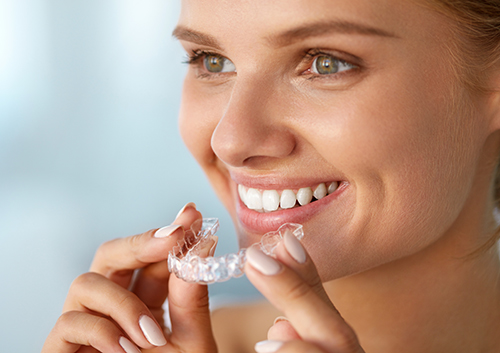
You may have a talent for home repairs. You may be able to rebuild your computer. You may even be able to put together a whole room of furniture armed only with flat-box kits and an Allen wrench. But, please—don’t try do-it-yourself orthodontics!
Now that generic clear aligners are available, you might consider giving them a try to save some money. But is straightening your own teeth really a good idea? Before you are tempted, let’s look more closely at the products and the dental science involved.
Invisalign®
- Invisalign clear aligners are used by orthodontists and dentists with experience in custom treatment for your smile. A 3D image of your teeth will be captured by the iTero Element® scanner. Using special software, your doctor can map out each projected shift in your teeth, and even show you a projection of your finished smile!
- Your Invisalign aligners will be tailored to fit your teeth precisely using the 3D scan and 3D printing. They are made from SmartTrack® material, a product specifically engineered for a perfect, comfortable fit. Invisalign aligners are even trimmed to fit your individual gumline to prevent irritation.
- When your first sets of Invisalign aligners arrive at our Menlo Park or San Carlos, CA office, Dr. Kathleen Tavarez will check for fit, answer any questions you might have about use and care, and let you know what to look for and what to expect. Your progress will be monitored with visits every six to eight weeks. (And for parents of teens, Invisalign aligners can offer blue “compliance indicators” to let you know they are being worn the 20-22 hours a day necessary for the best and fastest results.)
Generic Aligners
- You might be required to make a putty mold of your own upper and lower teeth, which is not the easiest thing to do well, and to take selfies of your teeth.
- The aligners will be sent to you in the mail. They are generally made of hard plastic with generic gumlines. There will be no one to tell you if the aligners fit properly.
- They are sometimes less expensive because there is no in-person medical supervision. A dental professional working for the company will look at the model created from molds you submit, and recommend a series of aligners to correct the problems he detects by looking at the model and your selfies. This supervisor will not be able to assess the overall dental health of each patient to make sure teeth and gums are healthy and ready to start treatment, and will not be able to tell if the teeth are moving properly or improperly once the aligners are in use.
Finally, while generic aligners may potentially have some success in minor tooth straightening, they are not created to deal with complex bite issues or malocclusions. In fact, using generic aligners with no supervision can cause more serious dental problems than a patient started with.
Sure, sometimes a do-it-yourself project turns out well. But your teeth and bones are too important for home improvement. When it comes to creating a beautiful, even smile and balanced, comfortable bite while making sure of your dental health, it’s always best to trust a professional like Dr. Kathleen Tavarez to provide you with gentle, tested, and successful care!
April 2nd, 2025

Just like that, it’s Spring, and the world looks brighter! The skies are sunnier. Daylight in Menlo Park or San Carlos, CA lasts longer. And your smile can be brighter, too—with a little bit of spring cleaning.
After all, sometimes dental habits become so automatic that we don’t pay them as much attention as we should. Without careful daily brushing and flossing, you could start to see surface staining on your enamel. Or red and swollen gums. Or plaque buildup around your brackets. Or tartar deposits along your gumline and behind your teeth.
The start of the season is a good time to spring ahead with a plan for better oral health, and we have some simple ideas to help you clean and protect your smile all through the year.
Assemble the right tools.
- Use a soft-bristled toothbrush, because anything firmer can be hard on your tooth enamel and gums. If you’re having trouble removing food particles and plaque, especially around brackets and wires, an electric toothbrush might be a game changer.
- Find the right floss. If you’ve been neglecting flossing because it’s difficult, especially with braces, there are lots of options available for better, easier cleaning. Whether it’s floss threaders, floss picks, interproximal brushes, or water flossers, Dr. Kathleen Tavarez can recommend the best products for cleaning around your brackets and wires.
- Choose fluoride toothpaste. Fluoride not only helps prevent cavities by creating an unfavorable environment for cavity-causing bacteria, it also actually strengthens tooth enamel as well. Win/win!
Use those tools!
- Brush all the surfaces of your teeth carefully (no need to scrub) and brush along the gumline at a 45˚ angle. This will help prevent plaque from accumulating above and below the gumline, where it can harden into tartar.
- Brush often enough and long enough. Dentists generally recommend brushing twice a day, for two minutes each time, but you might need to increase your brushing schedule when you wear braces.
- Brush before replacing aligners or wearing your retainer. You don’t want to trap food particles or bacteria in your appliance!
- Floss at least once a day, or more often as recommended. Proper flossing can be tricky sometimes, especially with braces, so ask your orthodontist, dentist, or the care team at Tavarez Orthodontics for the best techniques for your teeth.
Make sure your dental products are in top shape.
- Replace your toothbrush as often as necessary. After three months or so, bristles start to fray. They don’t clean as effectively, and they could be abrasive to gum tissue. Change out your brush every three to four months, including the head on your electric brush. A good way to remember is to change your brush with the change of seasons.
- Check the date(s)! Many toothpastes, mouthwashes, and other oral supplies come with a “best used by” date, ensuring that your products remain safe and effective.
- Choose the right toothbrush holder. Your brush should air-dry upright, because germs thrive in closed, damp environments. And your holder shouldn’t allow your brush to touch other people’s brushes to avoid transfer of bacteria and viruses. Clean your brush holder regularly to remove toothpaste residue and germs.
- Clean your aligners, retainer, mouthguard, night guard, and/or cases for your appliances as recommended. Bits of food, bacteria, viruses, and other germs collect there as well.
Work with the experts for your brightest smile.
- See your dentist regularly. You’ll discover any problems which might be dimming your smile, and you’ll discover them early.
- Schedule cleanings with your exams. Your hygienist uses tools such as ultrasonic or hand scalers and polishers to remove stubborn plaque, tartar deposits, and surface stains that brushing can’t.
- If you want brighter teeth, talk to Dr. Kathleen Tavarez or your dentist to discover the best time for whitening treatment. And when the time is right, consider professional whitening. While whitening kits are available in almost any drug store or supermarket, office treatments or kits provided by your dentist use stronger ingredients and are more effective.
Easy steps, yes? Step up your cleaning routine, and you’ll have a springtime filled with not just brighter smiles, but healthier smiles, too!
March 26th, 2025
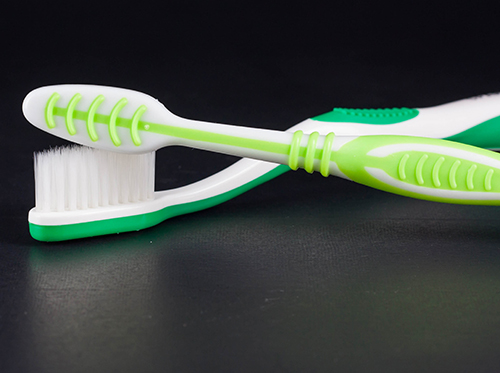
Have you ever thought about how you're cleaning and storing your toothbrush when you're not using it? Did you know that the way you store your toothbrush could have an affect on your oral health? In this post, we'll look at some steps you can take to maximize toothbrush cleanliness and minimize bacteria.
Below are some tips from Dr. Kathleen Tavarez for toothbrush use and storage:
- Don't share your toothbrush – This may seem obvious, but sharing a toothbrush exposes both users to bacteria and microorganisms from the other user, which can increase chances of infection. You should also avoid storing your toothbrush in the same container as other people’s toothbrushes.
- Thoroughly rinse your toothbrush after each use – Rinsing your toothbrush well under running water will help remove food particles, toothpaste, and other debris from the bristles of your brush.
- Store your toothbrush in an open-air container not a sealed one – Putting a wet toothbrush in a sealed container creates a favorable environment for microorganisms and bacteria.
- Soak your toothbrush in an antibacterial mouthwash after use – There is some evidence to suggest that soaking your toothbrush in an antibacterial solution may reduce the amount of bacteria present on the toothbrush.
- Change your toothbrush every three months – The bristles of your toothbrush become less effective and frayed after repeated use so it's a good idea to replace it on a regular basis. It's also wise to replace it after you've been sick.
There are many simple things you can do to make your oral-care regimen as clean as possible. Use common sense when storing your toothbrush—don't put it in a dirty place like the edge of your sink or in the shower (please, not by the toilet!), and keep it upright in a cool dry place—and you're usually good to go. If your toothbrush is looking a little worse for wear, drop by our Menlo Park or San Carlos, CA office and we'll be glad to provide you with a new one!



 Website Powered by Sesame 24-7™